
Early Pregnancy Symptoms Before and After a Missed Period
A missed period is one of the clearest early pregnancy symptoms, yet pregnancy-related changes can begin before your expected period. Breast tenderness, fatigue, light spotting, nausea, and shifts in smell or appetite may appear at different times, and some people have no noticeable symptoms at all.
Early pregnancy symptoms overlap with premenstrual symptoms, so a pregnancy test is the most dependable way to check whether you are pregnant. Tracking your cycle, noting unusual changes, and knowing when to seek medical care can help you choose your next step with more confidence. If you are trying to conceive, you can also review these tips for getting pregnant.

Table of Contents
1) Missed Period

A missed period is a common early pregnancy symptom when your menstrual cycles are predictable and your period is at least a week late. Pregnancy hormones prevent the uterine lining from shedding, so your expected bleeding does not arrive.
Cycle timing can shift because of stress, illness, travel, weight changes, intense exercise, polycystic ovary syndrome, thyroid conditions, or changes in birth control. Take a home pregnancy test when your period is late, and repeat it if the result is negative while your period remains absent.
2) Light Implantation Bleeding or Spotting

Light spotting may occur one to two weeks after conception and can happen near the time your period is due. Implantation bleeding is usually pink or brown, light in flow, and brief.
Many pregnancies do not include implantation spotting. Heavy bleeding, bleeding that continues, passing clots, dizziness, or significant pain requires prompt medical advice because those symptoms need evaluation.
3) Tender, Swollen Breasts
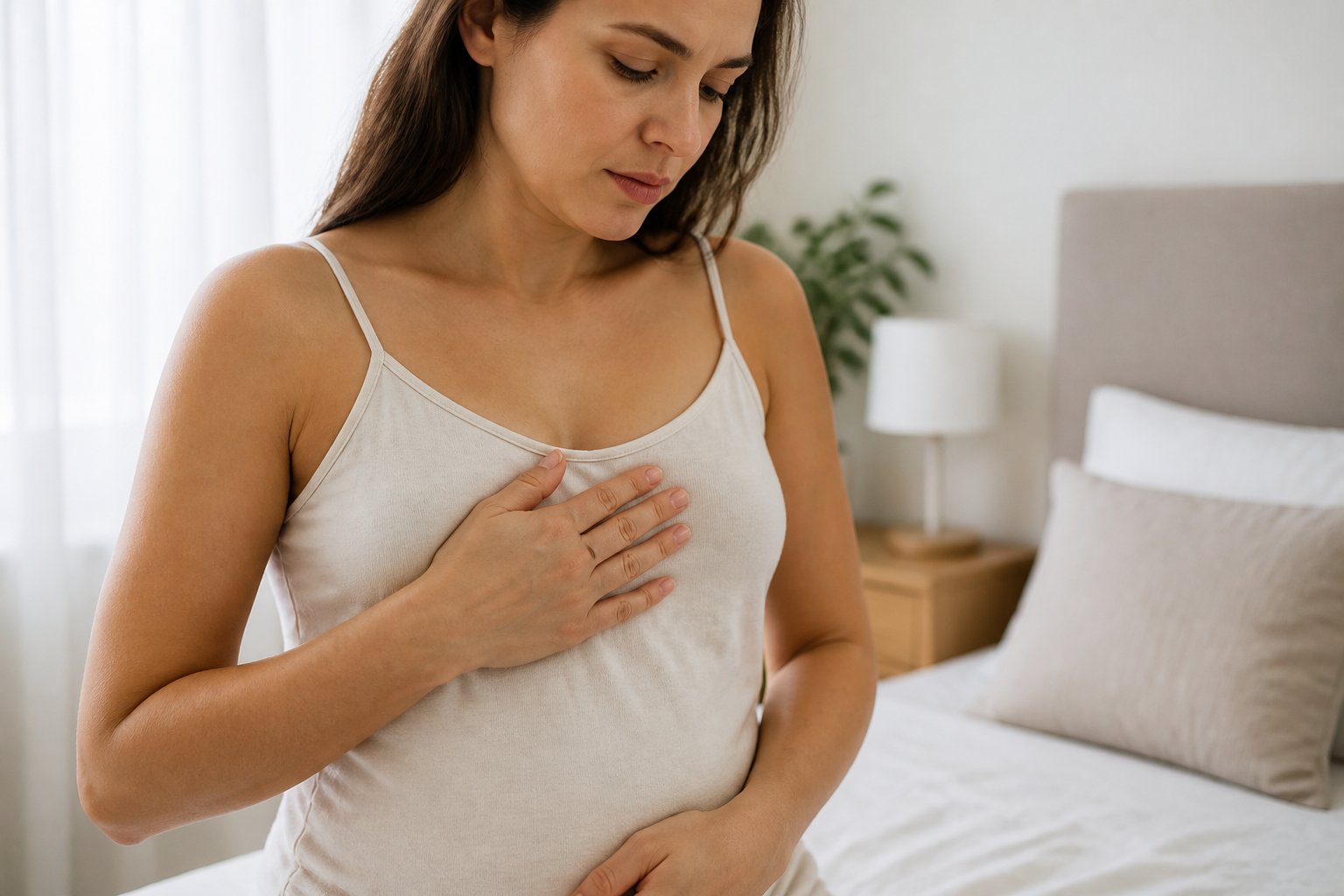
Breast tenderness, swelling, tingling, or increased sensitivity can begin during the first weeks of pregnancy. Rising estrogen and progesterone affect breast tissue, and your nipples or areolas may look darker or larger.
PMS produces similar breast changes, so this symptom alone cannot confirm pregnancy. A supportive bra, soft clothing, and a warm or cool compress can reduce discomfort while you wait to test.
4) Unusual Fatigue

Unusual fatigue can appear early in pregnancy as progesterone levels rise and your body begins supporting hormonal and circulatory changes. You might feel sleepy after ordinary activities or need more rest than usual.
Poor sleep, anemia, stress, infection, and thyroid problems also cause fatigue. Rest when possible, drink fluids, eat regular meals, and contact a clinician if exhaustion is severe or comes with fainting, shortness of breath, or chest pain.
5) Nausea With or Without Vomiting
Nausea may begin around four to six weeks of pregnancy and can occur at any time of day. You might feel queasy without vomiting, notice stronger reactions to odors, or find familiar foods unappealing.
Small meals, plain crackers, ginger, and regular sips of water can help. Contact a clinician if you cannot keep liquids down, urinate very little, feel faint, or lose weight, since severe vomiting can cause dehydration.
6) More Frequent Urination
Needing to urinate more often can occur early in pregnancy as increased blood flow causes your kidneys to process more fluid. You may notice extra bathroom trips during the day or wake during the night.
Frequent urination also occurs with increased fluid intake, caffeine, diabetes, or a urinary tract infection. Burning, pelvic pain, fever, blood in your urine, or a strong urge with little urine calls for medical evaluation.
7) Mild Cramping or Pelvic Discomfort
Mild cramping or pelvic pressure can accompany implantation and early uterine changes. The sensation may resemble gentle menstrual cramps and may come and go.
PMS, ovulation, gas, and digestive changes create similar discomfort. Seek urgent care for severe or one-sided pelvic pain, shoulder pain, fainting, dizziness, or bleeding, especially after a positive pregnancy test.
8) Heightened Sense of Smell or Taste Changes
A heightened sense of smell or a metallic taste can develop during early pregnancy. Cooking odors, coffee, perfume, or other familiar scents may suddenly trigger nausea or food aversions.
Hormonal changes are one possible cause, while illness, medications, reflux, and oral health problems can also alter taste or smell. Notice which foods feel tolerable, keep bland options available, and maintain hydration.
9) Increased Vaginal Discharge
Increased thin, milky-white vaginal discharge, called leukorrhea, can occur early in pregnancy because hormones increase blood flow and vaginal secretions. Healthy discharge usually has little odor and does not cause itching or burning.
Yellow, green, gray, or foul-smelling discharge, along with itching, pain, sores, or bleeding, may indicate an infection. Arrange a clinical evaluation for those changes, especially during pregnancy.
10) Bloating and Constipation
Bloating and constipation can appear early because progesterone slows digestion. You may feel full sooner, notice abdominal pressure, or have fewer bowel movements.
Water, fiber-rich foods, gentle movement, and regular bathroom time can support digestion. Ask a healthcare professional before using laxatives or supplements if pregnancy is possible, and seek care for severe pain, persistent vomiting, or a swollen abdomen.
When Do Early Pregnancy Symptoms Start?
Early pregnancy symptoms most often become noticeable around four to six weeks of pregnancy, though light spotting, cramping, or fatigue can occur sooner. Pregnancy dating starts from the first day of your last menstrual period, so “four weeks pregnant” is about two weeks after conception in a typical cycle.
Can pregnancy symptoms start one week after conception?
Some people notice light spotting, mild cramping, or fatigue about one week after conception. Implantation timing differs, and many people have no symptoms that early, so a symptom cannot confirm pregnancy.
What symptoms may happen before a missed period?
Before a missed period, you might notice breast tenderness, fatigue, bloating, light spotting, mild cramps, increased smell sensitivity, or changes in taste. These signs also occur with PMS, so testing at the right time gives you a clearer answer.
What symptoms are common around four weeks of pregnancy?
Around four weeks, a missed period, breast changes, fatigue, mild cramping, bloating, and increased urination are common possibilities. Nausea often begins between four and six weeks, though its timing and intensity vary.
When to Take a Pregnancy Test or Contact a Clinician
A home pregnancy test is the practical first step after a missed period, while urgent symptoms require medical care regardless of test results. Use the test according to its instructions and arrange follow-up when results and symptoms do not match.
When is a home pregnancy test most accurate?
A home urine pregnancy test is most accurate after the first day of a missed period, with accuracy improving several days later. Testing with concentrated first-morning urine and following the timing instructions can improve the chance of detecting human chorionic gonadotropin (hCG).
What should you do after a negative test but a missed period?
Repeat the test in about one week if your period has not started, since testing too early can produce a false-negative result. Contact a clinician if repeat tests remain negative, your cycles stay irregular, or you have concerning symptoms; a blood test can detect pregnancy earlier in some cases.
Which symptoms need urgent medical care?
Seek urgent care for severe or one-sided abdominal pain, heavy bleeding, fainting, shoulder pain, severe dizziness, chest pain, trouble breathing, or vomiting that prevents hydration. These symptoms can signal ectopic pregnancy, significant blood loss, or another condition requiring immediate assessment.
Frequently Asked Questions
What are the earliest pregnancy symptoms before a missed period?
The earliest possible signs include light spotting, mild cramping, breast tenderness, fatigue, bloating, and increased sensitivity to smells. These symptoms overlap with PMS and cannot diagnose pregnancy on their own.
Can you be pregnant with no early symptoms?
Yes, you can be pregnant without noticeable symptoms during the first trimester. A missed period followed by a correctly timed pregnancy test provides more useful information than symptom tracking alone.
How do early pregnancy symptoms differ from period symptoms?
Early pregnancy and PMS can both cause cramps, breast soreness, fatigue, bloating, mood changes, and appetite shifts. A missed period, persistent symptoms, and a positive pregnancy test point more strongly toward pregnancy, though testing remains the reliable confirmation.
What does your stomach feel like in early pregnancy?
Your stomach may feel bloated, gassy, full, or mildly crampy during early pregnancy. Severe, localized, or worsening pain needs prompt medical assessment.
Can early pregnancy symptoms start at two weeks?
Symptoms can begin around two weeks after conception for some people, although many people feel no changes at that point. Pregnancy dating places two weeks of pregnancy near ovulation for a typical cycle, so the exact timing depends on how your pregnancy is dated.