
Can Newborns Sleep on Their Side? Safe Sleep Guidance
If you’re wondering can newborns sleep on their side, the safest guidance is clear: place your newborn flat on their back for every nap and nighttime sleep. Side sleeping is unstable, and a baby can roll onto their stomach before they have the strength to reposition safely.

Back sleeping lowers the risk of sleep-related death, including sudden infant death syndrome (SIDS), for babies through their first year. This recommendation applies to healthy full-term babies, premature babies, and babies with reflux unless your pediatrician gives you a specific medical plan.
You can make each sleep safer by using a clear, firm sleep space and sharing the guidance with every caregiver. If you have questions about your newborn’s position, reflux, or rolling, contact your baby’s pediatrician for personalized advice.
Table of Contents
Why Back Sleeping Is Safer Than Side Sleeping
Back sleeping is the safest newborn sleep position because side sleeping can lead to stomach sleeping, which carries a higher SIDS and suffocation risk. The American Academy of Pediatrics supports placing babies on their backs for every sleep, continuing the Back to Sleep campaign’s core message.
Side sleeping also gives your baby less stability on the mattress. A newborn who shifts from the side onto the stomach may not have enough head, neck, or upper-body strength to move away from a blocked airway.

Why Side Sleeping Can Lead to Stomach Sleeping
A baby placed on the side can gradually rotate forward as the shoulders, hips, or legs shift. Once the face turns toward the mattress, the baby may re-breathe exhaled air or struggle to lift the head.
Stomach sleeping also increases exposure to overheating and reduced oxygen. Place your newborn wholly on their back at the start of every nap and nighttime sleep.
How Sleep Position Affects SIDS Risk
Stomach sleeping has the strongest connection with SIDS and other sleep-related deaths. Side sleeping is unsafe because it makes an unplanned move to the stomach easier, especially before your baby can roll with control.
Safe sleep guidelines recommend back sleeping until age 1. Every caregiver should follow the same routine, including grandparents, babysitters, and child-care providers.
Does Back Sleeping Increase Choking From Spit-Up?
Back sleeping does not increase choking from spit-up in healthy babies. Your baby’s airway anatomy and protective reflexes help fluids move toward the esophagus, where they can be swallowed or coughed up.
Keep your baby’s sleep surface firm, flat, and level, including when reflux is a concern. Contact your pediatrician if spit-up comes with breathing trouble, poor feeding, green or bloody vomit, or poor weight gain.
What If Your Newborn Rolls Onto Their Side?
A newborn who shifts onto their side should be returned gently to their back when you notice it, especially if the movement happens before intentional rolling. Once your baby rolls from back to stomach and stomach to back independently, you can leave them in the position they choose after starting sleep on their back.

Keep the crib free of pillows, wedges, and positioners while you watch for new movement skills. A wearable blanket or sleep sack can provide warmth without loose covers.
The Newborn Curl vs. Intentional Rolling
The newborn curl is a reflexive movement. Your baby may tuck the hips, bend the knees, or lean onto one side because of muscle tone and gravity.
Intentional rolling involves coordinated movement and repeated attempts to change position. A baby who can move from back to stomach and return from stomach to back has developed more control than a newborn showing a brief curled posture.
When to Reposition Your Baby
If your newborn ends up on their side during sleep, gently turn them onto their back when you see it. Do not use rolled towels, sleep positioners, or other items to hold the body in place.
Stop swaddling as soon as your baby shows signs of trying to roll. Swaddling can restrict the arm movement your baby needs to respond to a changed position and raises the risk of suffocation or entrapment after rolling begins.
What Changes Once Baby Is Rolling Both Ways
Continue placing your baby on their back at the beginning of every sleep. After your baby rolls independently in both directions, you do not need to keep returning them to their back each time they move during sleep.
Use a bare crib with a firm mattress and fitted sheet. Your baby can wear an appropriately sized sleep sack or wearable blanket, provided it does not compress the arms, chest, or hips.
How to Set Up a Safe Sleep Environment
A safe sleep environment uses a firm, flat crib or bassinet with a fitted sheet and no loose objects. The setup should support back sleeping and keep your baby’s nose and mouth clear throughout sleep.
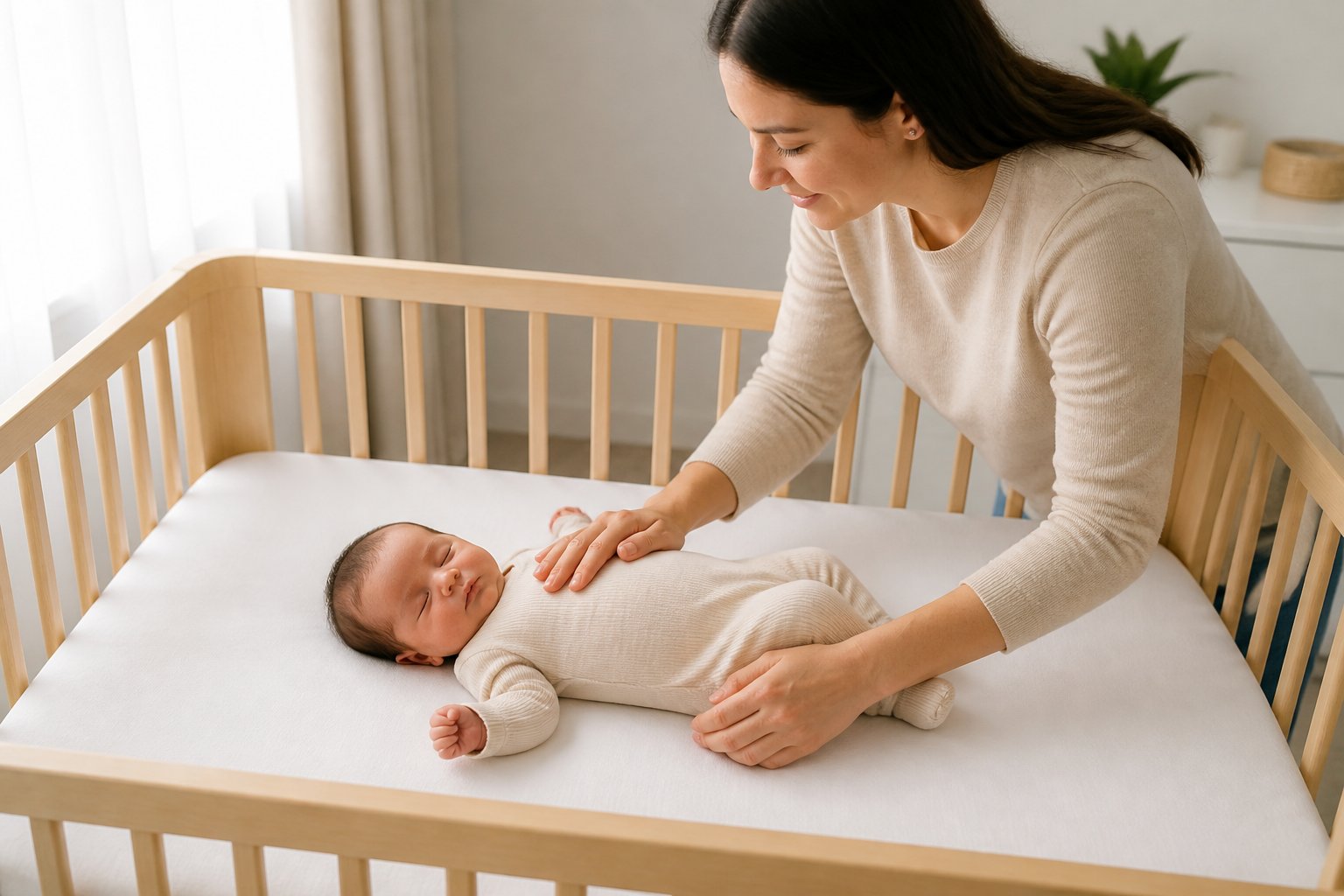
A baby monitor can help you observe from another room, though it does not replace safe positioning or in-person checks. Keep the sleep space close to your bed so you can respond easily.
Choose a Firm, Flat Sleep Surface
Use a safety-approved crib, bassinet, or portable play yard with a firm mattress and a fitted sheet made for that product. The mattress should remain level, with no gaps along the edges.
Avoid adult beds, couches, and padded surfaces for routine infant sleep. Soft surfaces can allow your baby’s face to press into fabric or create spaces where the body becomes trapped.
What Belongs in the Crib or Bassinet
Your baby needs only a firm mattress, a fitted sheet, and properly fitted sleep clothing. Keep pillows, loose bedding, loose blankets, stuffed toys, and bumper pads out of the sleep space.
Room-sharing without bed-sharing helps you monitor your baby while preserving a separate sleep surface. Dress your baby for the room temperature and check the chest or back of the neck for signs of overheating.
Why Positioners, Wedges, and Inclined Sleepers Are Unsafe
Sleep positioners and wedges can restrict movement, press against the face, or create a pocket where breathing becomes difficult. Inclined sleepers also allow babies to slide into positions that interfere with breathing.
Keep the crib mattress flat, including when reflux or spit-up is a concern. Elevating one end of the mattress does not provide a safe reflux solution.
When to Move Baby Out of Car Seats, Swings, and Bouncers
Move your baby to a firm, flat sleep surface as soon as practical after a car ride or supervised use of a swing, bouncer, or lounger. These products can place the head forward or allow the body to slump.
Car seats remain essential for travel, but they are designed for transportation. Check your baby after arriving, and transfer them to the crib or bassinet before unattended sleep.
Safe Alternatives for Reflux, Gas, and Flat Spots
Reflux, gas, and flat spots have safer solutions that preserve back sleeping. Feeding routines, awake positioning, and pediatric guidance address comfort without adding products to the crib.
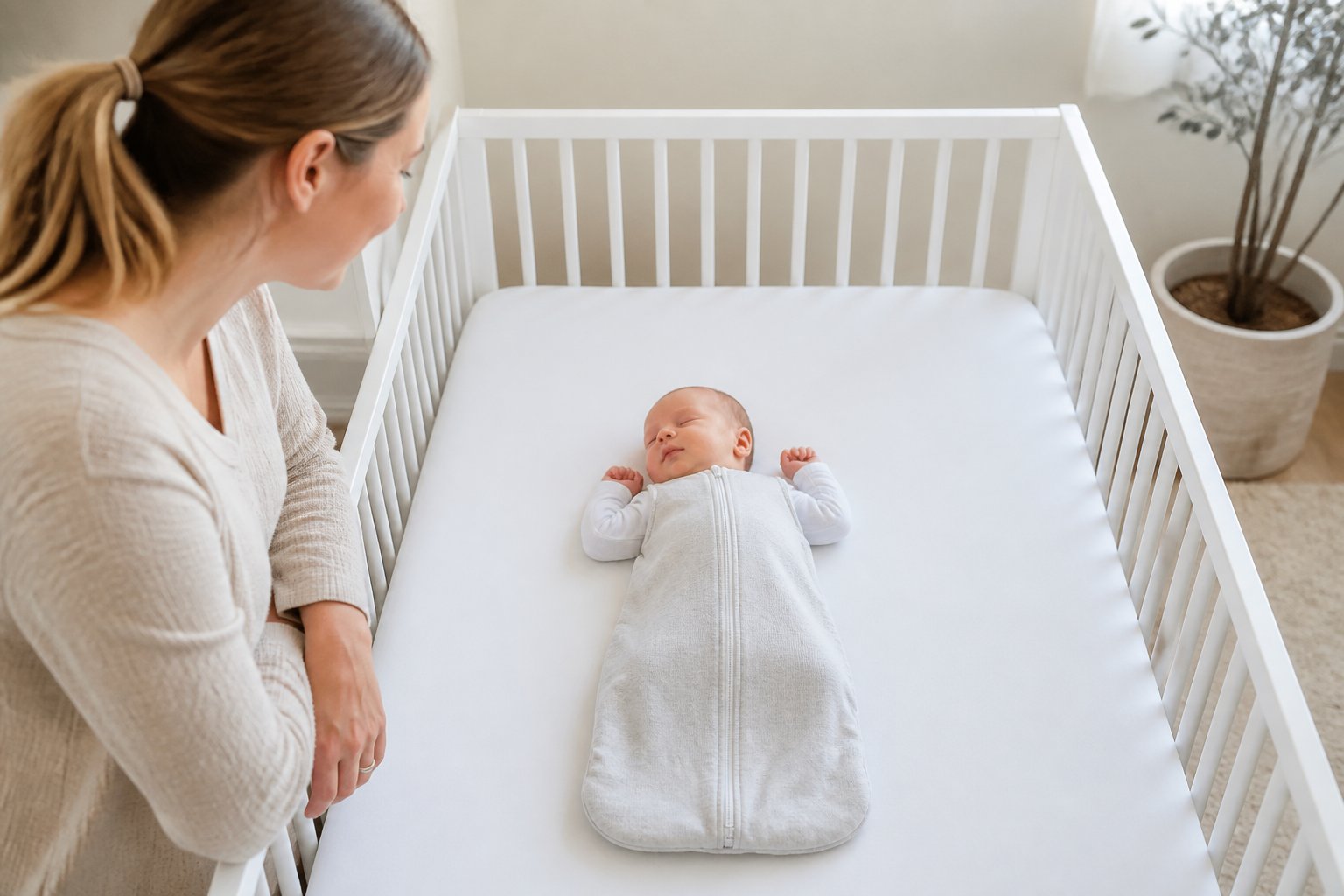
Hold your baby upright while you are awake and alert, provide daily supervised tummy time, and ask your pediatrician about symptoms that persist or worsen. Sleep position changes require medical direction when a diagnosed condition is involved.
Burping and Upright Time After Feeds
Burp your baby during and after feeds, then hold them upright while you remain awake and attentive. This can help reduce swallowed air and discomfort before you place them in the crib.
When sleep begins, return your baby to a firm, flat surface on their back. Do not prop the mattress or use an inclined sleeper for reflux.
Supervised Tummy Time for Head and Neck Strength
Supervised tummy time while your baby is awake builds neck, shoulder, and upper-body strength. Start with brief sessions and add time as your baby becomes comfortable.
Use tummy time on a firm floor surface while you stay within reach. Return your baby to their back for every nap and nighttime sleep.
When a Flat Head or Head-Turning Preference Needs Attention
Mild flat head syndrome, also called positional plagiocephaly, often improves as babies gain mobility and spend more time upright. Tummy time, carrying, and varying the direction your baby faces during awake activities can reduce prolonged pressure on one area.
Tell your pediatrician if your baby always turns the head one way, has a tight neck, or develops a marked flat spot. Torticollis can limit head movement and may need exercises or other treatment. Seek prompt medical care for breathing changes, unusual coloring such as a harlequin color change, or difficulty waking.
Start Every Sleep on Your Baby’s Back
Start every nap and nighttime sleep with your baby flat on their back on a firm, level surface. This newborn sleep position follows safe sleep guidelines through the first year, including for babies with reflux.
Keep the crib or bassinet empty except for a fitted sheet, and stop swaddling when rolling attempts begin. If your baby later rolls independently in both directions, leave them in the position they choose while maintaining the same clear sleep environment.
Frequently Asked Questions
How long can newborns sleep on their side?
Newborns should not be placed on their side for sleep. Start every sleep with back sleeping through age 1, and ask your pediatrician for individualized guidance if a medical condition affects positioning.
Can a newborn sleep on their side if I am watching them?
A newborn still needs back sleeping for routine naps and nighttime sleep, even when you are watching. Supervision does not remove the risk created by an unstable side position or a move onto the stomach.
Can a newborn sleep on their side on my chest?
Your newborn can rest on your chest while you are fully awake and alert, with the airway visible and the baby supported. Move your baby to a separate, firm, flat sleep surface on their back before you become tired or fall asleep.
What should I do if my newborn rolls to their side while sleeping?
Gently return your newborn to their back when you notice the side position. Check that the crib is empty, and contact your pediatrician if the movement is frequent, appears involuntary, or comes with breathing concerns.
Can a swaddled baby sleep on their side?
A swaddled baby should be placed on their back, and swaddling must stop as soon as your baby shows signs of rolling. Use a properly fitted sleep sack with the arms free after rolling attempts begin.
Can newborns sleep on their back with their head turned to one side?
Yes, a newborn can sleep on their back with the head turned to one side. Keep the baby’s body flat on the back and discuss a persistent head-turning preference or neck stiffness with your pediatrician.