
Newborn Crying in Sleep: What It Means and When to Help
Newborn crying in sleep can sound alarming, yet brief whimpers, grunts, or cries often happen while your baby remains asleep. Newborns spend much of their sleep in active sleep, when facial movements, sucking motions, and vocal sounds are common.
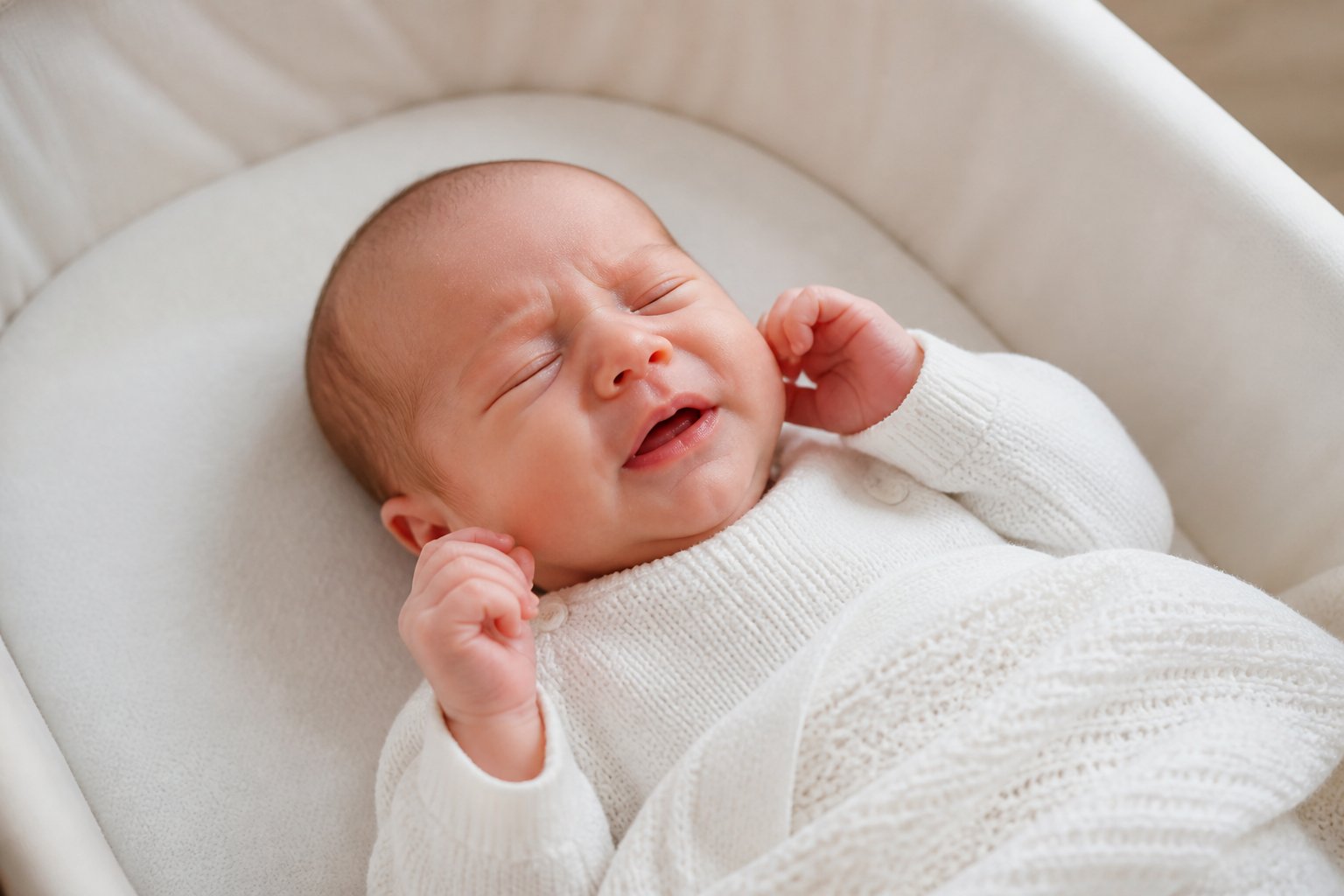
Pause for a moment before picking your baby up, then check whether your baby is awake, hungry, uncomfortable, or showing signs of illness. A short cry that stops on its own needs a different response from persistent, distressed crying.
You can learn your baby’s patterns by watching breathing, eye movement, body tension, and feeding cues. If you remain concerned or your baby seems unwell, contact your pediatrician for guidance.
Table of Contents
Is Your Newborn Still Asleep or Actually Awake?
A newborn who cries with closed eyes, relaxed breathing, and brief movements is often in active sleep. Watching for clear signs of wakefulness helps you avoid interrupting a sleep cycle while still responding when your baby needs you.

Signs of Active Sleep vs. a True Night Waking
Active sleep resembles REM sleep in older children and adults. Your baby may flutter their eyelids, smile, frown, suck, twitch, grunt, or let out a brief cry while remaining asleep. A developing nervous system makes these movements and sounds more noticeable during newborn sleep cycles.
A true night waking includes sustained eye opening, rhythmic crying that grows louder, searching movements, or a body that stays alert after several seconds. Your baby may turn toward your voice or show hunger cues when fully awake.
Keep the room dim and watch for 30 to 60 seconds when the cry is soft and intermittent. If your baby’s breathing looks comfortable and the sounds fade, give the sleep cycle time to continue.
For more detail on these patterns, see this guide to newborn active sleep.
Why Brief Crying Can Happen Between Sleep Cycles
Newborn sleep cycles are short, so babies move between lighter and deeper stages many times overnight. During these sleep cycle transitions, your baby can vocalize, stir, or cry before settling into the next stage.
An immature nervous system also makes it difficult for newborns to connect sleep periods smoothly. Hunger, a small amount of gas, or a startling sensation can create a short burst of sleep crying without a full night waking.
Why Newborns Cry While They Sleep
Newborn crying while sleeping commonly comes from active sleep, hunger, physical discomfort, reflexes, or an overtired baby. The sound, timing, and other body cues help you choose whether to wait, soothe, feed, or check your baby.

Hunger and Early Feeding Cues
Newborns need frequent feeds throughout the day and night, and crying is a late hunger cue. Before the cry becomes strong, look for lip smacking, hand-to-mouth movements, rooting, or increased stirring.
If your baby wakes near the expected time for a night feeding, offer a feed even if the crying began during sleep. Follow the feeding plan from your pediatrician, especially if your baby is premature, has jaundice, or needs help gaining weight.
Gas, Reflux, and Digestive Discomfort
Trapped gas can cause grunting, squirming, facial tightening, or a sudden cry during sleep. Reflux discomfort may appear after a feed, particularly when your baby arches, swallows repeatedly, or becomes unsettled when laid down.
Burp your baby during and after feeds according to your clinician’s advice. Always place your baby flat on their back for sleep, even when reflux is suspected, and ask your pediatrician about frequent discomfort or forceful spit-up.
The Moro Reflex
The Moro reflex is a newborn startle response that can cause your baby to fling out their arms, cry, and wake briefly. It can follow a noise, a shift in position, or the sensation of falling during light sleep.
If your pediatrician approves, swaddle your baby snugly with the hips able to move freely. Stop swaddling when your baby shows signs of rolling, and move to an appropriate sleep sack.
Temperature, and Diaper Discomfort
A wet diaper, stool, tight clothing, or an uncomfortable room temperature can trigger nighttime crying. Feel your baby’s chest or back for warmth and dress your baby in about one more light layer than you wear in the same room.
Check the diaper when crying continues or your baby is fully awake. Keep diaper changes calm and brief at night, using low light and quiet movements.
Overtiredness and Overstimulation
An overtired baby can cry during sleep after struggling to settle. Long stretches of wakefulness, missed sleepy cues, bright light, or frequent handling can push your baby past a comfortable sleep window.
Watch for yawning, staring, jerky movements, and fussiness. Short wake windows, a quieter room, and a predictable wind-down routine help reduce overstimulation.
What to Do When You Hear Crying at Night
Respond in stages: pause briefly, observe breathing and wakefulness, then offer the least stimulating help that fits the cue. Keep every response consistent with safe sleep guidance from the American Academy of Pediatrics.

When to Pause and Watch
Wait several seconds when the cry is soft, irregular, and paired with closed eyes or small movements. Watch your baby’s color, breathing, and body position from nearby.
Step in promptly when crying becomes rhythmic or intense, your baby opens their eyes and stays alert, or you notice hunger cues. Never leave a baby in an unsafe position while waiting.
How to Soothe Without Fully Waking Your Baby
Start with a gentle touch on your baby’s chest or shoulder and a quiet voice. White noise at a low volume, a pacifier for a baby who uses one, or a properly fitted sleep sack may help your baby settle.
Keep your baby on their back on a firm, flat sleep surface with loose blankets, pillows, and toys outside the sleep space. Swaddling requires careful technique and must stop once rolling begins.
When a Feed or Diaper Change Is Needed
Offer a feed when your baby shows rooting, hand-to-mouth activity, or sustained waking. Check the diaper when your baby feels damp, has soiled, or continues crying after soothing.
Use dim lighting and limit conversation during a night feeding or diaper change. Burp your baby if needed, then return your baby to the safe sleep space on their back.
When Sleep Crying May Signal a Health Concern
Sleep crying deserves medical attention when it is persistent, unusually intense, or paired with symptoms such as poor feeding, breathing difficulty, fever, or repeated vomiting. A change from your baby’s familiar crying pattern also warrants a call to your pediatrician.

Colic, Teething, and Common Sources of Pain
Colic involves prolonged, intense crying in an otherwise healthy baby, often beginning in the first weeks and easing by 3 to 4 months. A colic cry can sound high-pitched or urgent and may occur at a predictable time each day.
Teething is less common in the earliest newborn period, so persistent crying should not automatically be blamed on teething. Congestion, hair wrapped around a toe, skin irritation, constipation, reflux, or an ear infection can also cause discomfort.
Record when the crying happens, how long it lasts, feeding patterns, spit-up, stools, and wet diapers. This information helps your pediatrician evaluate excessive crying.
Red Flags That Need Prompt Medical Advice
Call your pediatrician promptly if your newborn has inconsolable crying, poor feeding, fewer wet diapers, persistent vomiting, a fever, unusual sleepiness, or a cry that sounds sharply different from normal. Seek emergency care for difficulty breathing, blue or gray skin, a seizure, severe weakness, or an inability to wake your baby.
Trust your concern when your baby’s behavior changes suddenly. A pediatrician can help distinguish normal newborn crying from illness and tell you where to seek care.
A Calm Response Helps You Read Your Baby’s Cues
A calm, repeatable response makes it easier to notice whether sleep crying comes from active sleep, hunger, discomfort, or illness. Sleep regression and a developmental leap can temporarily change sleep patterns, while sleep associations can influence how your baby settles after stirring.
Newborns are too young for many formal sleep-training approaches, so focus on feeding needs, safe sleep, and age-appropriate wake windows. Night terrors are not a typical explanation for newborn crying, and familiar soothing methods such as a quiet voice, gentle touch, or feeding are more appropriate.
If you feel overwhelmed, place your baby safely on their back in the crib and take a brief break while another trusted adult helps. Never shake, hit, or jerk a baby.
Frequently Asked Questions
Why does my newborn cry in sleep but not wake up?
Your newborn may be in active sleep, when facial expressions, body movements, and crying sounds occur without full wakefulness. Hunger, gas, a wet diaper, or a sleep cycle transition can also cause a brief cry that fades.
Should I wake my baby if they are crying in their sleep?
Wait briefly when your baby’s eyes remain closed, breathing is comfortable, and the cry is short or intermittent. Wake and assess your baby when crying continues, hunger cues appear, or your baby becomes alert.
Why does my baby randomly cry in sleep and then stop?
A random cry often occurs during a sleep cycle transition, a startle response, or mild digestive discomfort. If your baby settles quickly and acts normally while awake, observation is appropriate.
Is crying during active sleep normal for a 1- or 2-month-old?
Yes, crying during active sleep is common for many 1- and 2-month-old babies. Brief whimpers, grunts, and facial movements are expected when breathing remains steady and your baby feeds well.
What does a colic cry sound like?
A colic cry is intense, prolonged, and difficult to soothe, often with a high-pitched or urgent quality. Colic episodes can last for hours and repeat around a similar time, so contact your pediatrician for evaluation.
When should I call a pediatrician about newborn crying at night?
Call your pediatrician for persistent or inconsolable crying, poor feeding, fewer wet diapers, fever, repeated vomiting, or a marked change in your baby’s cry. Seek emergency care for difficulty breathing, blue or gray skin, seizure-like activity, or trouble waking your baby.